

World Oceans Day 2026
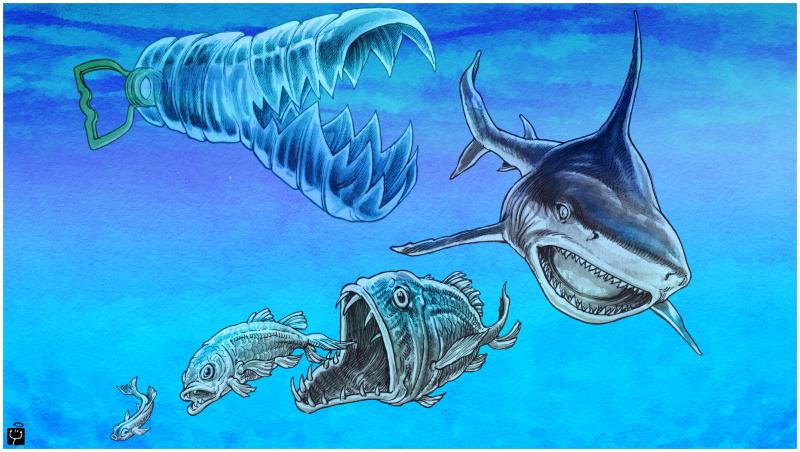
In the ocean’s food chain, every creature eventually becomes prey to something larger. But today, a new predator has entered the cycle: plastic.
Research published in 2026 shows that microplastics are no longer just floating debris on the ocean surface. They have become embedded in marine ecosystems and are now found inside fish and other sea creatures. In a study of 878 fish representing 138 species across the South Pacific, 32.7% were found to contain microplastics in their digestive systems. In some locations, that figure reached as high as 74.5%.
At the same time, the United Nations estimates that between 19 and 23 million tonnes of plastic waste enter rivers, lakes, and oceans every year. If current trends continue, this pollution could nearly triple by 2040.
In nature, there is always a bigger predator. But in today’s oceans, the most dangerous predator is not alive.
Plastic does not hunt, it does not hunger, and it does not die. It simply breaks into smaller pieces and quietly makes its way through every level of the food chain.
- Use in a business presentation.
- Use in the classroom.
- Use on personal website/blog.
- Use on non-profit website/newsletter.
- All licenses include the right to publish on social media channels.
- Free custom video slideshow when you purchase four cartoons or more.
Can't find the license you need or do have questions? Check our FAQ or contact us.



The Age of Plastic
Great.